The following questions and
discussion items elicit strategic thinking by those responsible to lead
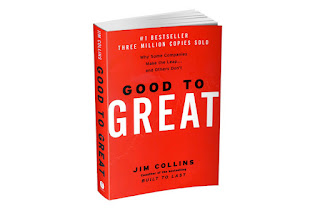
a Christian ministry, especially as they employ strategic planning processes. Jim
Collins and his research team identified characteristics of those organizations
that transitioned from being “good” to becoming “great.”
Demonstrating
Level 5 Leadership
Level 5 leaders embody a paradoxical
mix of personal humility and professional will. [They] are fanatically driven,
infected with an incurable need to produce sustained results. They are resolved
to do whatever it takes to make the [organization] great, no matter how big or
hard the decisions” (page 39).
Item one:
What evidence can you offer from your experience at your Christian ministry
that you possess or are developing this level of professional will?
Assembling the Right Team of People
Before Determining Exactly What It Should Do
“Good-to-great leaders began the
transformation by first getting the right people on the bus (and the wrong
people off the bus) and then figured out where to drive it” (Page 62).
Item two:
Can you accurately and courageously classify those individuals currently
serving with you as either: 1) the right person for his/her role, 2) the right
person, but in the wrong role, or 3) the wrong person to serve at your
Christian ministry (he/she doesn’t “belong on the bus”)?
Item three:
Describe the opportunities you have had at your Christian ministry to exhibit
the following people disciplines
—when in doubt, don’t
hire—keep looking
—when you know you need
to make a people change, act
—put your best people on
your biggest opportunities, not your biggest problems
Hearing and Confronting
the Brutal Facts, Yet Never Losing Faith
“All good-to-great
companies began the process of finding a path to greatness by confronting the
brutal facts of their current reality” (page 88).
Item four: What process(es) do you employ to determine the truth of your
situation?
Item five: What mistakes have you made in applying the “Stockdale
Paradox”—retaining faith that you can and will prevail in the end, while
confronting the most brutal facts of your current reality?
Item six: Have you wasted time and energy trying to motivate people?
people who didn’t “belong on the bus”
Understanding What Can
and Should Be Passionately and Profitably Pursued (Collin’s “Hedgehog
Concept”)
Item seven: Both great organizations and those that are not labor to create
strategic plans. Do you have the patience and passion to enter into a process
to discover what you can be the best in the world at and what you cannot?
Item eight: “Every [great organization] eventually gained a deep
understanding of [the principle of focusing solely on what it could potentially
do better than any other organization] and pinned its future on allocating
resources to those few arenas” (pages 100-101). Are you willing to engage in
difficult and potentially controversial change in order to become part of a
great organization?
Pursuing Purpose(s) with
Discipline
“Sustained great results
depend upon building a culture full of self-disciplined people who take
disciplined action, fanatically consistent with [best-in-the-world activities
that it can passionately and profitably pursue]” (page 142).
Item nine: Do you and the individuals who serve with you have this
diligence and intensity?
Item ten: What should you and your Christian ministry stop doing? “In a
good-to-great transformation, budgeting is a discipline to decide which arenas
should be fully funded and which should not be funded at all” (page 140).
Using Technology Wisely
“The good-to-great
companies used technology as an accelerator of momentum, not a creator of it.
You could have taken [these] same leading-edge technologies … and handed them
to [subpar organizations] for free, and [they] still would have failed to
produce anywhere near the same results” (page 162).
Item eleven: What technology expenditures has your Christian ministry wasted
because it was a responding to trends rather than employing technology to
accelerate the pursuit of its purpose(s)?
Building Momentum for
Long-Term Commitment to Purpose(s)
“Good-to-great transformations
often look like dramatic, revolutionary events to those observing from outside,
but they feel like cumulative processes to people on the inside. No matter how
dramatic the end result, the good-to-great transformations never happened in
one fell swoop” (p. 186). “Tremendous power exists in the fact of
continual improvement and the delivery of results. Point to tangible
accomplishments—however incremental at first—and show how these steps fit into
the context of an overall concept that will work. When you do this in such a
way that people see and feel the buildup of momentum, they will line up with
enthusiasm” (pages 174-175).
Item twelve: What long-term payoff actions deserve your Christian ministry’s patient, persistent pursuit and support?
Item thirteen: What costs have been incurred by your Christian ministry for
bets on new programs or products that were inconsistent with sustained,
consistent pursuit of its purpose(s)?
Comments
Post a Comment